
Product Usage: This PRODUCT IS INTENDED AS A RESEARCH CHEMICAL ONLY. This designation allows the use of research chemicals strictly for in vitro testing and laboratory experimentation only. All product information available on this website is for educational purposes only. Bodily introduction of any kind into humans or animals is strictly forbidden by law. This product should only be handled by licensed, qualified professionals. This product is not a drug, food, or cosmetic and may not be misbranded, misused or mislabled as a drug, food or cosmetic.
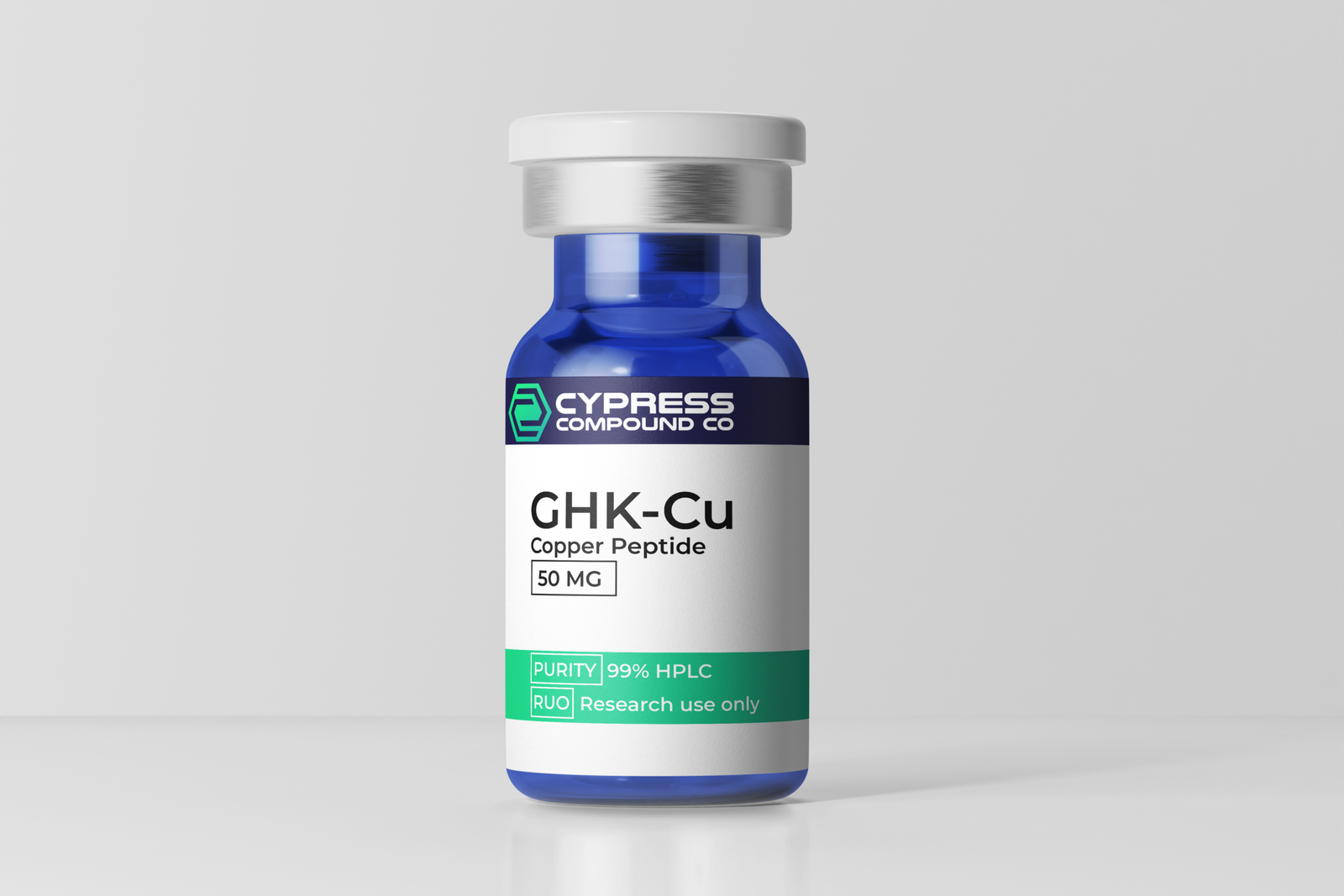
GHK-Cu Copper Peptide 50mg
$60.00
GHK-Cu is a research peptide consisting of the tripeptide sequence Gly-His-Lys complexed with copper(II) ions, forming a biologically active peptide–metal complex. It is studied for its role in extracellular matrix regulation, cellular signaling, and copper-dependent biochemical pathways.
Preclinical investigations suggest that GHK-Cu influences collagen synthesis, gene expression, and antioxidant enzyme activity through copper-mediated redox mechanisms. As a research compound, it is commonly used to explore peptide-driven tissue remodeling, metalloprotein regulation, and mechanisms relevant to regenerative biochemistry.
For research use only. Not intended for human or animal use.
Properties
Molecular Formula
Molecular Weight
Monoisotopic Mass
Polar Area
Complexity
XLogP
Heavy Atom Count
Hydrogen Bond Donor Count
Hydrogen Bond Acceptor Count
Rotatable Bond Count
PubChem LCSS
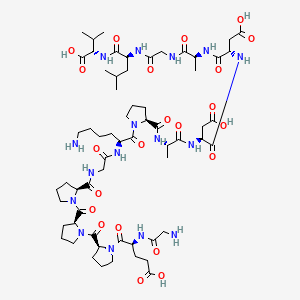
2D Structure
Identifiers
CID
InChI
IUPAC Name
Overview
GHK-Cu is a research peptide consisting of the tripeptide sequence Gly-His-Lys complexed with copper(II) ions, forming a biologically active peptide–metal complex. It is studied for its role in extracellular matrix regulation, cellular signaling, and copper-dependent biochemical pathways.
Preclinical investigations suggest that GHK-Cu influences collagen synthesis, gene expression, and antioxidant enzyme activity through copper-mediated redox mechanisms. As a research compound, it is commonly used to explore peptide-driven tissue remodeling, metalloprotein regulation, and mechanisms relevant to regenerative biochemistry.
For research use only. Not intended for human or animal use.
Biochemical
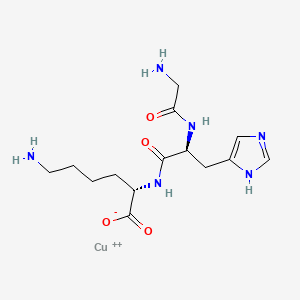
Sequence: Gly-His-Lys (Cu²⁺)
Molecular Formula: C62H98N16022
Molecular Weight: 402.92 g/mol
PubChem CID: 71587328
Research Applications
GHK-Cu is widely used in laboratory research to study fibroblast migration, immune cell recruitment, angiogenic signaling pathways, and extracellular matrix synthesis. Common experimental models include dermal fibroblast cultures, endothelial cell–based assays, neuronal regeneration frameworks, and controlled preclinical animal studies.
Additional research applications involve the investigation of oxidative stress modulation, antimicrobial peptide interactions, stem-cell–associated signaling markers, and transcriptional responses linked to tissue remodeling and regenerative processes under controlled experimental conditions.
Mechanistic Context
Mechanistic investigations suggest that GHK-Cu influences multiple biochemical pathways, including integrin-mediated signaling, regulation of transforming growth factor-β (TGF-β), modulation of pro-inflammatory cytokine activity, and activation of antioxidant response elements.
Gene expression analyses further indicate that GHK-Cu affects transcriptional networks involved in cellular migration, extracellular matrix turnover, neuronal viability, and redox homeostasis. Copper sequestration by the peptide may reduce metal-catalyzed oxidative stress, thereby altering downstream signaling cascades under controlled experimental conditions.
Preclinical Research Summary
Preclinical investigations of GHK-Cu include in-vitro fibroblast and keratinocyte models, neuronal regeneration assays, antimicrobial interaction studies, and multiple in-vivo animal models of tissue injury and inflammation.
Experimental observations report enhanced cellular migration, increased extracellular matrix deposition, modulation of inflammatory mediators, and altered gene-expression patterns associated with regeneration and stress response. These findings are presented solely as laboratory observations without implication of clinical, cosmetic, or therapeutic outcomes.
Form & Analytical Testing
GHK-Cu is supplied as a synthetic, research-grade peptide complex. Product identity and purity are verified using validated analytical methods, including high-performance liquid chromatography (HPLC) and mass spectrometry (MS). Batch-specific analytical documentation is provided where applicable.
Referenced Citations
1. T. Huang et al., “Body protective compound-157 enhances alkali-burn wound healing in vivo and promotes proliferation, migration, and angiogenesis in vitro,” Drug Des. Devel. Ther., vol. 9, pp. 2485–2499, 2015.
2. T. Huang et al., “Body protective compound-157 enhances alkali-burn wound healing in vivo and promotes proliferation, migration, and angiogenesis in vitro,” Drug Des. Devel. Ther., vol. 9, pp. 2485–2499, 2015.
3. T. Huang et al., “Body protective compound-157 enhances alkali-burn wound healing in vivo and promotes proliferation, migration, and angiogenesis in vitro,” Drug Des. Devel. Ther., vol. 9, pp. 2485–2499, 2015.
4. T. Huang et al., “Body protective compound-157 enhances alkali-burn wound healing in vivo and promotes proliferation, migration, and angiogenesis in vitro,” Drug Des. Devel. Ther., vol. 9, pp. 2485–2499, 2015.
5. T. Huang et al., “Body protective compound-157 enhances alkali-burn wound healing in vivo and promotes proliferation, migration, and angiogenesis in vitro,” Drug Des. Devel. Ther., vol. 9, pp. 2485–2499, 2015.
RUO Disclaimer
The products offered on this website are intended exclusively for in vitro laboratory research. In vitro studies are conducted outside of a living organism. These products are not drugs, medicines, or therapeutic agents and have not been approved by the U.S. Food and Drug Administration (FDA) for the diagnosis, treatment, prevention, or cure of any disease or medical condition.
These products are not intended for use in humans or animals, and any form of bodily introduction is prohibited.
For laboratory research use only. Not for human, medical, diagnostic, or veterinary use.
PENDING
Storage Instructions
All products are manufactured using a lyophilization (freeze-drying) process, which enhances stability during storage and transport. When stored properly, lyophilized peptides remain stable for shipping for up to 3 to 4 months.
Lyophilization, also known as cryodesiccation, is a dehydration process in which peptides are first frozen and then exposed to reduced pressure. This allows water to sublimate directly from solid to gas, leaving behind a stable, crystalline white solid commonly referred to as a lyophilized peptide. In this form, peptides may be stored at room temperature until reconstitution.
Once reconstituted with bacteriostatic water, peptides must be stored under refrigeration to maintain stability. After reconstitution, refrigerated peptides are generally stable for up to 30 days.
Upon receipt, peptides should be kept cold and protected from light. For short-term storage (days to weeks), refrigeration at or below 4°C (39°F) is recommended. Lyophilized peptides are typically stable at room temperature for short durations; however, refrigeration is preferred when possible.
For long-term storage (several months to years), peptides should be stored frozen. Deep freezing at −80°C (−112°F) is optimal for preserving peptide stability over extended periods.
Important safety information
What you should know before using Ro Mane Spray.
Hair growth treatments
Ro Mane Spray
- Compounded med. Not FDA-approved
Oral finasteride
- Generic Propecia
Oral minoxidil
- Generic Loniten
Topical minoxidil
- Generic Rogaine